Updated September 2026.
There is no single best place to live in the Phoenix area. The right community depends on your commute, budget, preferred home style, daily routine, and how much you value amenities, outdoor access, or desert and mountain views.
For a quick starting point, Chandler offers convenient East Valley access and varied housing; Fountain Hills is known for an elevated desert setting and views; Tempe provides a central location with light rail and urban amenities; Scottsdale offers a broad range of luxury, golf, dining, and outdoor options; and Glendale gives buyers access to the West Valley, major entertainment destinations, and several distinct housing areas.
This guide compares those five communities using practical relocation criteria. Phoenix is a large metropolitan area, and Chandler, Fountain Hills, Tempe, Scottsdale, and Glendale are separate municipalities—not neighborhoods within the City of Phoenix.
Five Phoenix-Area Communities at a Glance
Community | Consider it when you prioritize | Housing and setting | Tradeoffs to compare |
|---|---|---|---|
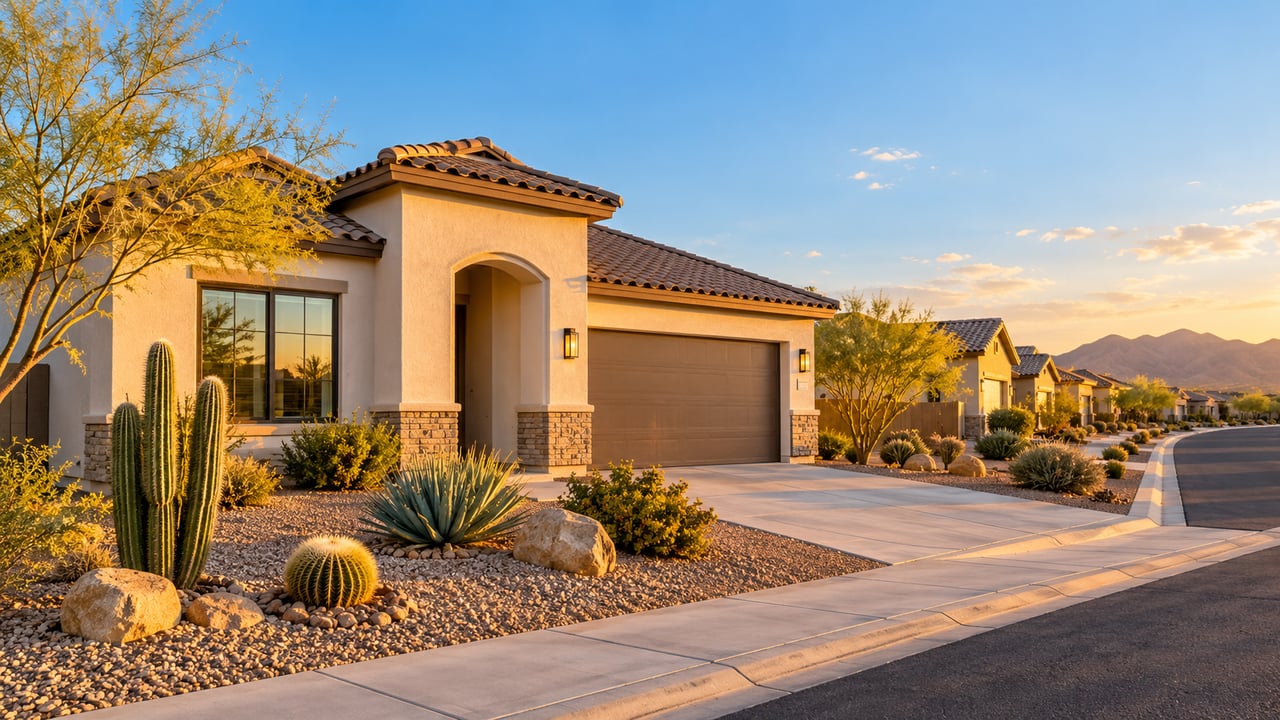
Chandler | East Valley access, employment centers, dining, and a wide choice of neighborhoods | Condos, established subdivisions, newer communities, gated homes, and larger lots in parts of South Chandler | Commutes vary by freeway access; newer communities may include HOA fees and longer drives to central Phoenix |
Fountain Hills | Mountain and desert views, golf, hiking, and a quieter setting | Hillside homes, custom properties, townhomes, and golf-oriented communities | Fewer direct freeway connections and longer trips to some Valley employment and entertainment centers |
Tempe | A central location, airport access, light rail, Tempe Town Lake, and walkable activity centers | Condos, townhomes, established single-family neighborhoods, and newer infill | Smaller lots and more activity near downtown and Arizona State University; pricing varies sharply by location |
Scottsdale | Luxury housing, golf, dining, resorts, hiking, and a wide range of neighborhood settings | Condos, established neighborhoods, gated communities, golf properties, and custom estates | Higher prices in many areas, HOA costs, and long north-south travel distances within the city |
Glendale | West Valley access, sports and entertainment, Loop 101 connections, and housing variety | Historic areas, established subdivisions, townhomes, and newer communities toward the northwest | The city covers a large area, so commute times and nearby amenities differ significantly by neighborhood |
1. Chandler: East Valley Convenience and Housing Variety
Chandler is in the southeast Valley, with access to Loop 101, Loop 202, and nearby US 60. Buyers often compare it with Gilbert, Tempe, Mesa, and South Scottsdale because those communities can serve similar commute patterns while offering different housing and neighborhood settings.
Downtown Chandler provides restaurants, events, and local businesses, while other parts of the city range from established subdivisions to newer communities, gated neighborhoods, and larger-lot properties. South Chandler can be appealing when yard size, newer construction, or access to employment corridors is important. Central and north Chandler may provide shorter trips to Tempe, Scottsdale, and Phoenix Sky Harbor International Airport, depending on the exact route.
The main question is not whether Chandler is “best,” but which part of Chandler fits your routine. Compare freeway access, HOA rules and fees, lot size, home age, and drive times to the places you will visit most often.
Visit the official City of Chandler website for current municipal information.

Related guide: Pros and Cons of Living in Chandler, Arizona
2. Fountain Hills: Desert Views and an Elevated Setting
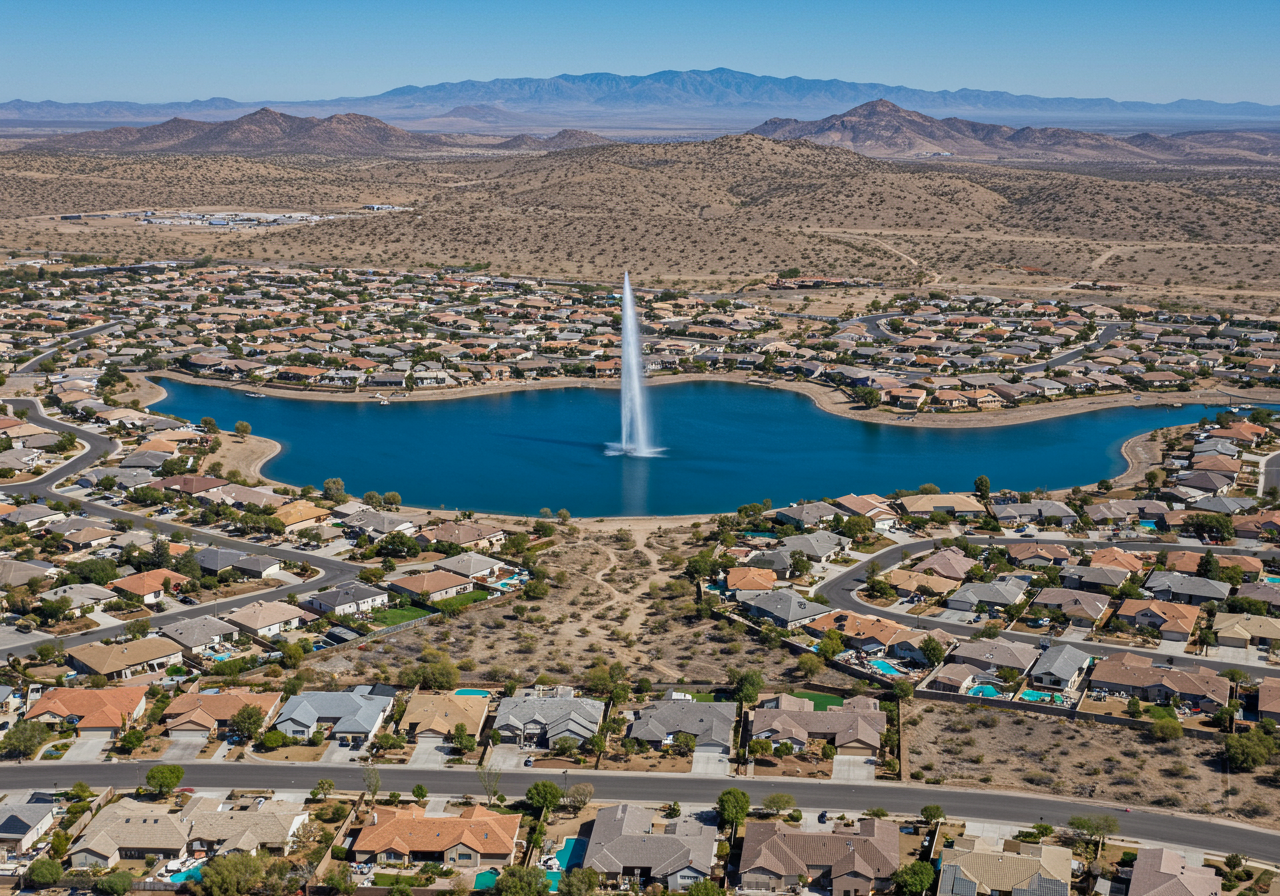
Fountain Hills sits northeast of Scottsdale near the McDowell Mountains. Its elevation, rolling terrain, golf courses, and desert setting create opportunities for mountain, city-light, and open-desert views that are harder to find in flatter parts of the Valley.
Housing includes townhomes, golf-oriented communities, hillside properties, and custom homes. Buyers interested in a view should compare the exact orientation and elevation of each lot rather than relying on a community name alone. A view can also affect price, driveway slope, landscaping, sun exposure, and insurance or maintenance considerations.
Fountain Hills has its own restaurants, services, parks, and events, but it is not directly connected to a Valley freeway. Buyers should test drive times to work, the airport, medical providers, and the parts of Scottsdale or Phoenix they expect to visit regularly.
Visit the official Town of Fountain Hills website for current municipal information.
3. Tempe: Central Access, Transit, and Urban Amenities
Tempe occupies a central position between Phoenix, Scottsdale, Mesa, and Chandler. Arizona State University, Tempe Town Lake, Mill Avenue, light rail, and proximity to Phoenix Sky Harbor International Airport make it one of the Valley’s more connected communities.
Housing changes noticeably across Tempe. Near downtown and the university, buyers will find condos, townhomes, apartments, and infill development close to restaurants and events. Farther south, the housing stock includes established single-family neighborhoods, larger lots in select areas, and convenient access to US 60 and Loop 101.
For buyers who want walkability or transit, the exact address matters: Tempe is not uniformly walkable. It is also worth comparing event activity, aircraft and traffic patterns, parking, lot size, and the distance to a light-rail stop or daily services.
Visit the official City of Tempe website for current municipal and transportation information.
Related guide: What It’s Like Living in Tempe, Arizona
4. Scottsdale: Luxury Options, Golf, Dining, and Outdoor Access
Scottsdale stretches a long distance from its southern border near Tempe to the open desert of North Scottsdale. That geography creates several distinct markets rather than one uniform Scottsdale experience.
Old Town and South Scottsdale offer central access, restaurants, events, condos, townhomes, and established neighborhoods. Central Scottsdale includes areas such as McCormick Ranch, Gainey Ranch, and the Shea Corridor. Farther north, buyers can compare golf communities, gated neighborhoods, custom homes, larger lots, and properties with mountain or desert views.
Scottsdale is a natural place to search for luxury homes, but price is only one factor. HOA structure, club memberships, lot orientation, renovation history, short-term-rental rules, and drive times can all affect whether a property is a good fit. A North Scottsdale home may offer space and views while requiring a longer drive to Old Town, downtown Phoenix, or the airport.
Visit the official City of Scottsdale website for current municipal information.
Related guide: Where Should You Live in Scottsdale, Arizona?
5. Glendale: West Valley Access and Several Distinct Districts
Glendale is part of the West Valley and covers a broad area with very different housing and amenity patterns. Westgate Entertainment District and State Farm Stadium are major destinations in the western portion of the city. Historic Downtown Glendale has an older street grid and local businesses, while the Arrowhead area near Loop 101 offers established neighborhoods, shopping, medical services, and access toward Peoria and North Phoenix.
Housing includes older homes near central Glendale, established subdivisions, townhomes, and newer options toward the northwest. Because Glendale is geographically spread out, two homes with a Glendale address can produce very different commutes and daily routines.
Buyers should compare the exact neighborhood, freeway access, distance to employment centers, HOA terms, home age, and nearby development—not simply the city name. The same approach applies when comparing Glendale with Peoria, Goodyear, Surprise, or Phoenix.
Visit the official City of Glendale, Arizona website for current municipal information.
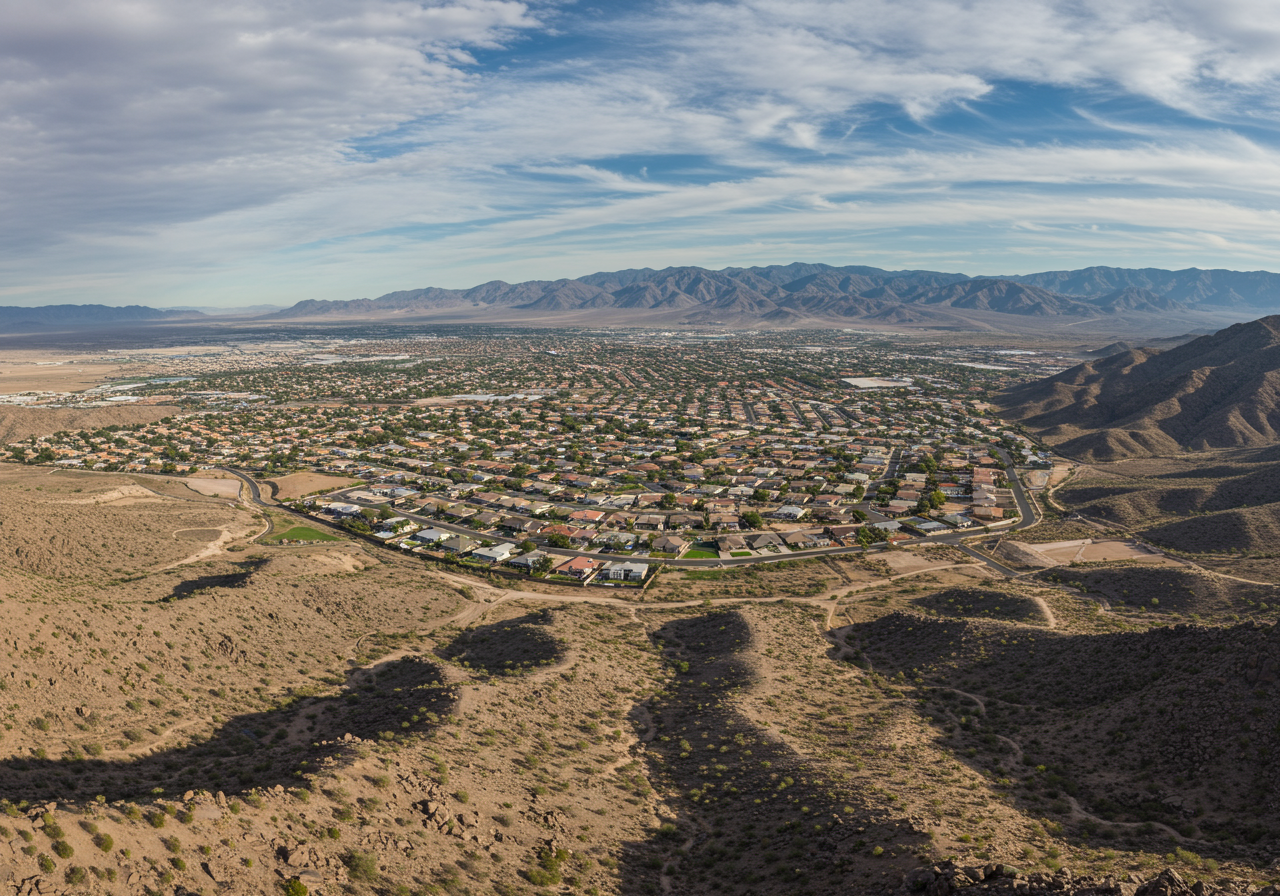
How to Choose the Right Phoenix-Area Community
Before narrowing the map, rank the factors that will affect your everyday life:
- Commute and travel: Test routes during the hours you expect to drive, including trips to the airport and other parts of the Valley.
- Total monthly cost: Compare the purchase price together with property taxes, insurance, HOA fees, utilities, cooling costs, and transportation.
- Home and lot: Decide how you value newer construction, renovation potential, yard size, privacy, pools, garages, or low-maintenance living.
- Views and outdoor access: Verify the actual lot orientation, elevation, trail access, nearby open land, and any future-development considerations.
- Daily amenities: Map the restaurants, shopping, medical services, recreation, and other destinations you expect to use.
- Independent research: Review current information from municipalities, school districts, law-enforcement agencies, and other authoritative sources. Conditions can vary by exact address and change over time.
A useful relocation search usually begins with two or three communities and a short list of measurable priorities. That creates a more productive comparison than relying on a generic ranking.
Frequently Asked Questions
What are the best places to live in the Phoenix area?
There is no universal best choice. Chandler is worth comparing for East Valley access and housing variety; Fountain Hills for desert and mountain views; Tempe for a central location and transit; Scottsdale for luxury housing, golf, dining, and outdoor access; and Glendale for West Valley connections and varied housing areas.
Is Scottsdale or Chandler a better fit?
Scottsdale generally offers a larger concentration of luxury, resort, golf, dining, and desert-oriented communities. Chandler often appeals to buyers comparing East Valley employment access, newer subdivisions, established neighborhoods, and a range of lot sizes. The better fit depends on the exact commute, property type, budget, and daily routine.
Which Phoenix-area communities offer mountain or desert views?
Fountain Hills, North Scottsdale, Paradise Valley, Cave Creek, Carefree, and parts of North Phoenix can offer strong view opportunities. Views are property-specific, so elevation, orientation, nearby construction, and surrounding land should be evaluated for every home.
How should I compare the East Valley and West Valley?
Start with the destinations you will visit most often. The East Valley includes communities such as Tempe, Mesa, Chandler, and Gilbert, while the West Valley includes Glendale, Peoria, Goodyear, and Surprise. Housing options, commute patterns, amenities, and new development differ within both regions.
What should I include in a Phoenix cost-of-living comparison?
Housing is usually the largest variable, but compare the full monthly picture: mortgage or rent, property taxes, insurance, HOA fees, electricity and cooling, commuting, vehicle costs, and any community or club fees. Use current quotes and official sources because costs change over time.
Local Guidance for Your Phoenix Relocation
Greg Corbett and the Living in Phoenix Arizona Team, brokered by HomeSmart, help buyers compare communities across Phoenix, Scottsdale, and the surrounding Valley. Greg’s Arizona real estate license is SA548517000. The team provides neighborhood context, video and virtual tours, current market information, and coordination from the initial search through closing.
Start with our Phoenix relocation guide and neighborhood guides. When you are ready, we can help you narrow the map around the home, setting, and daily routine that matter to you.